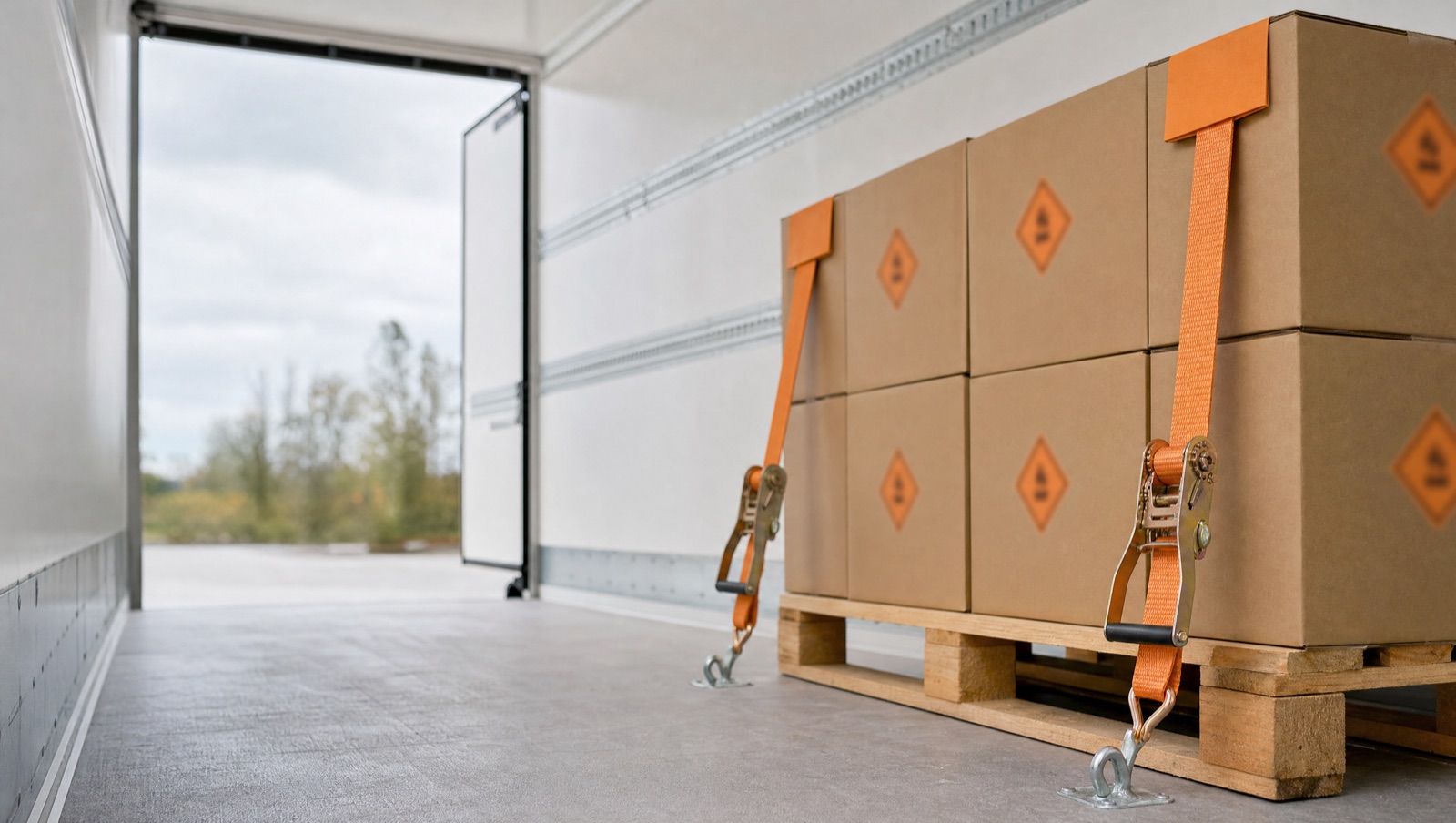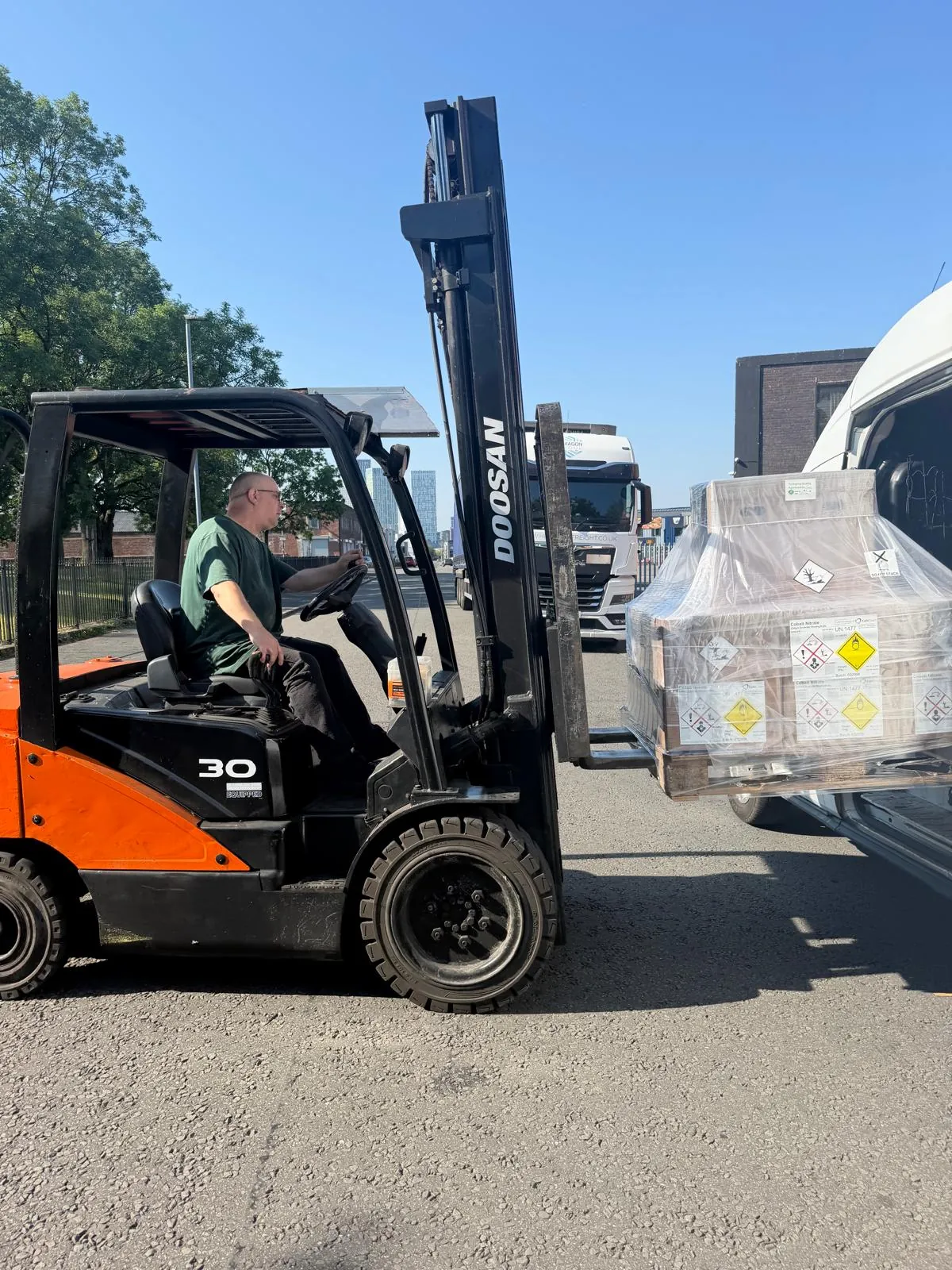
Class 1 explosives carried by road across the UK - flares, cartridges, perforating charges, detonators. One vehicle, one driver with the ADR Class 1 specialisation, route planned before we set off.
✓ Price confirmed before we collect · ✓ No obligation
Most dangerous goods couriers can't carry Class 1, because the bar is higher in every direction. Drivers need an extra specialisation on their ADR certificate, and because most explosives count as high consequence dangerous goods, the carrier needs a written security plan too. Great Britain then adds its own requirements on top of ADR.
We have all of that in place: ADR certified drivers with the Class 1 specialisation, an appointed Dangerous Goods Safety Adviser, and a transport security plan covering who's responsible, how routes and stops are planned, how the vehicle is protected and how incidents are reported.
If a courier can't show you all three, they shouldn't be carrying your explosives.
Checked against the ADR security rules, which most Class 1 loads fall under.
Before you book any courier, ask to seeUnder ADR, Divisions 1.1, 1.2, 1.5 and 1.6, compatibility group C in Division 1.3, and a short list of Division 1.4 UN numbers are high consequence dangerous goods. Above the small-load threshold, every one of them needs a carrier with a security plan.
Blasting explosives, detonating cord and some perforating charges.
Some munitions and perforating guns.
Propellants and some display fireworks.
Most safety flares, cartridges and professional fireworks.
Blasting agents such as some emulsions.
Rarely seen outside defence work.
Not sure where your consignment sits? Send us the UN number and classification code and we'll tell you.
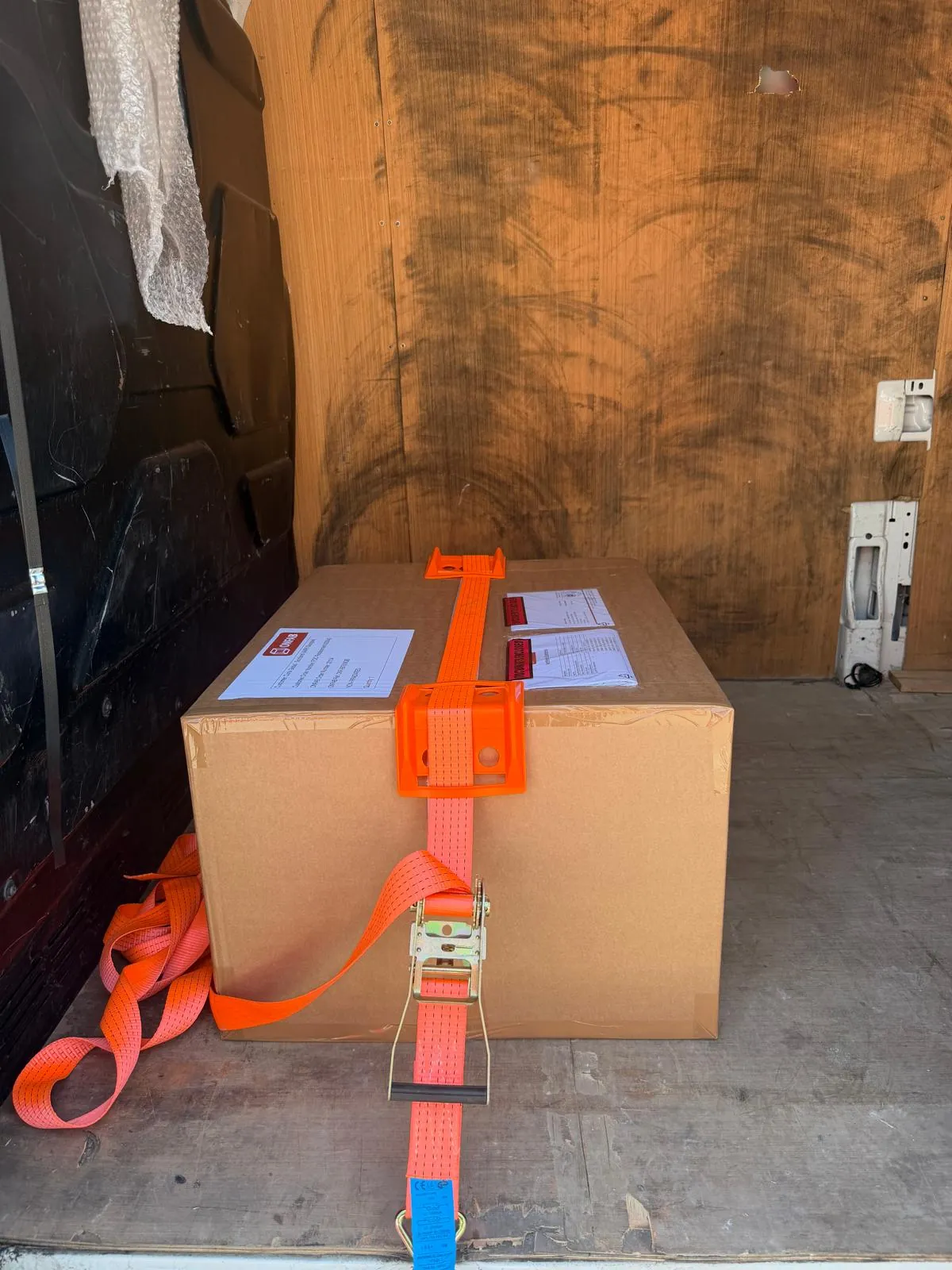
With explosives, the route matters as much as the vehicle. Most divisions are restricted in Category D tunnels like the Mersey tunnels, and Dartford is Category C. We plan the route, the timing and any stops from your dangerous goods note before we set off, and we stick to it.
An oilfield services company needs perforating charges moved from a licensed store to a well site. We plan the route around restricted tunnels, agree any stops in advance and deliver direct on one vehicle.
A safety equipment supplier has a pallet of marine flares for a chandlery at the coast. We check the paperwork before we collect and take them straight there, with nothing else on the van.
Yes. Our drivers hold the ADR Class 1 specialisation, and we work under a transport security plan that's been inspected by the Department for Transport.
All of them, from 1.1 to 1.6. Send us the UN number, classification code and net explosive quantity, and we'll confirm the vehicle and route before we collect.
Usually, yes. Professional display fireworks and marine distress flares are typically Division 1.3 or 1.4 explosives, which is most of what we're asked to move in this category.
Not for Class 1 loads that are restricted there. We'll go over the Mersey Gateway instead and build the extra time into your collection slot.
The UN number, the division and compatibility group, the net explosive quantity, how it's packed, and the collection and delivery addresses.
Price confirmed before we collect. No surprises on the invoice.